An MCP Safety Lab is a short, practical trust-scoring session for groups building with MCP servers, AI skills, Claude Code, Cursor, and agent tooling. Partners get scan credits, a live safety segment, project-level score pages, badge guidance, and a co-branded checklist so builders leave with a safer install workflow instead of a vague warning about supply chain risk.
Built for the groups creating MCP adoption right now.
The fastest path to volume is not a generic university pitch. It is showing up where builders are already shipping agents, teaching AI coding workflows, or packaging MCP tools for clients.
AI coding workshops
For Claude Code, Cursor, vibe coding, MCP, and agent-building cohorts that need a security habit before final demos.
Labs and classrooms
For universities, bootcamps, and continuing-ed programs teaching software supply chain risk in AI-native workflows.
Indie dev shops
For small shops and AI agencies that want a client-ready trust packet before installing or delivering agent stacks.
Directories and events
For MCP directories, newsletters, meetups, hackathons, and Discord groups that can add a visible trust layer to listings.
Give builders a useful safety ritual in one session.
A partner lab is designed to fit inside a workshop, demo day, agency onboarding call, or community event without turning the whole session into security training.
10-minute safety segment
A crisp guest segment on the risks that matter for local MCP installs: trust tiers, safety flags, vulnerability intelligence, and disqualifiers.
Scan credits for the group
Participants can score GitHub repos, npm packages, Smithery URLs, and OpenClaw skills before they connect tools to local agents.
Partner-ready proof
Score pages, badge embeds, and a co-branded checklist give students, clients, and community members something concrete to use afterward.
The lab can go live in days, not months.
The first pilot is intentionally lightweight. Send the audience, date, and a few repos or packages. MCP Skills handles the scoring workflow and partner materials.
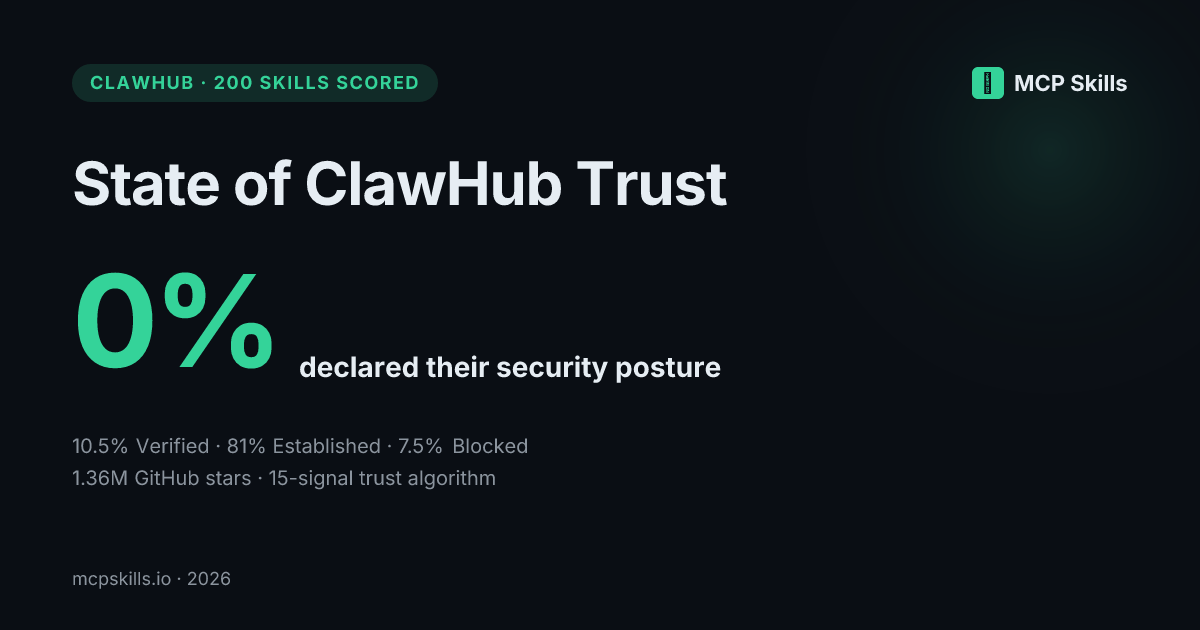
The trust layer has to be trustworthy too.
Partners should be able to explain exactly what the score does and does not mean. The lab keeps those boundaries visible.
What partners ask before saying yes.
What is an MCP Safety Lab?
A short partner session where MCP Skills helps a cohort, school, agency, hackathon, or community score MCP servers and AI skills before they are installed or shipped.
Who should partner with MCP Skills?
AI coding workshops, Claude Code or Cursor training programs, university labs, indie dev shops, AI agencies, hackathons, MCP directories, newsletters, and developer communities.
Is the partner pilot free?
Yes for qualified pilots. The point is adoption and safety literacy: scan credits, a short live segment, and a co-branded checklist can be included at no cost for the first partner wave.
What does MCP Skills score?
MCP Skills scores MCP servers, AI skills, GitHub repositories, npm packages, Smithery URLs, and OpenClaw skills across maintenance, publisher legitimacy, security posture, dependency health, vulnerability intelligence, tool safety, and usability signals.
Bring a safety layer to your next AI build session.
Send the audience, date, and a few repos or packages. We will propose the fastest partner format and get you a lab-ready checklist.